Monday, April 2, 2012

Extra Credit Blog #3

Colbert Report and Sherry Turkle


This interview, although humorous, shows audiences why humans need to give full attention at certain times and places. There is also no privacy when we are so open with one another on the Internet and social networking websites. People should step back and see the reality, and rethink how technology has impacted individuals. Turkle also says we have also lost respect for the length of literature by shortening text and have quick answers with e-mails and text messaging. There is a rushed change in communication and there is less quality in communication. People are becoming alienasted and they are being solely individuals. Turkle states, "people are performing on Facebook profiles and there is a performance exhaustion of the self ." Lastly, she addresses that "we need to live for our communication with people. " All of these points are addressed in her book Alone Together but is really expressed in the interview where Turkle's point of view is developed.

I believe similarly to Turkle even though my mindset may be old fashioned. I do not believe that technology should be eliminated or destroyed and I understand its temptation especially to generations who are exposed to it at birth. From baby years, enhanced and intelligent games refocus the attention of individuals and they are conditioned as they grow to continue using texting to constantly keep in touch with their parents, friends, and peers. In addition to cell phones social media websites have tempted individuals to conceal who they truly are by photo-shoped pictures, derogatory statuses, and thousands of friends. Privacy is also integrated as students do not know how much information should be put out in the public Web. Reputation and depiction are influencing factors for students fate in careers and education because of the Internet. Young adults should be cautious about what and how they speak their mind on the Internet and how they will be seen as professionals or others.

Turkle is taunted by the reporter to depict her to be stringent and ancient in her thinking. I absolutely support what she has to say because it is important to realize the consequences related to the Internet and how is has locally impacted people. The Ravi case is a dominant aspect of this problem.


Extra Credit Blog #2

This is a discussion about the given article from Social Media Week:


A WaPo lab poll showed how college students react in different environments. Anonymous online places which don't ask the specific name and information of students generate more freedom to talk about the real and honest opinions. Whereas, places like Myspace and Facebook require full names, pictures, hobbies and interests, where people can clearly define who you are based on the profile. In my opinions, superfluous attitudes and unnecessary statuses are results of social networking sites where people clearly want to try and show a side of them they might not be. Its the place where popularity and 'likes' are almost necessary in a world of people accepted and socially involved. 

In my paper, I wanted to address this issue and how Facebook and social networking sites serve a purpose to have a community with others, to constantly interact and stay in touch with people. Reversely, the outcome is that individuals become more isolated and individualized where they rely on these websites to have friends rather than using common or old fashioned face to face communication. Identity is a huge problem on the Internet where young adults and upcoming generations face a struggle with finding out who they are and this complication is worsen by the use of the Internet and technology.

As unfortunate future for young adults will be demonstrated by psychological addictions to the Internet and technology.  Just a few years ago my uncle would joke around about my thumbs falling off from carpel tunnel because I texted too frequently. Now, diagnosis and treatment will have to be study because of the extremity of college students dependence on Facebook and Twitter.

No matter what the addiction or problem may be, what are the consequences? How will the future handle more issues and complications with identity and security on the Internet? 

I am challenging myself in my research paper to battle these questions and find the right answers. 

Extra Credit Blog #1

On Monday, March 26, 2012 I conducted an interview with Dr. Gregory Blimling, the Vice President of Student Affairs for Rutgers University. Our time was spent discussing my research paper topic on privacy, identity, social networking websites, and technology for college students and the modern era. 

Here are some quotations based on Blimling's point of view and opinion on these topics. 
"Things have changed a lot. Higher education has been dramatically changed by social media the past seven years. The Facebook issue: I don't think I know someone who does not have a Facebook."


"We are in constant conversation and communication with one another"
"We adopt habits of texting where we feel this impulsive feeling and thought. The problem is making personal conversations public in some circumstances."
"Technology forms a different kind of community with a different kind of privacy."


"Technology makes people always available. But today everyone's communication is recorded. Everything I said can be recorded without my knowledge, with cell phone cameras."


"Students need to be taught about how things can be taken out of context."


"Laws have not caught up to where we are today."


"My observation is that students will stop coming to class. Instead, they will come to the university for other things, like access for things to complete their courses. Faculty members will begin marketing themselves as interactive teachers. We will become more visual about doing things. People will take in information differently and we be more aesthetic learners. We will have different language skills where we do not necessarily talk in complete sentences or thoughts."

Monday, March 26, 2012

Blog #10: Your Case


My paper reveals the modern concerns many individuals have about the influence of technology in young adult’s lives. Specifically, college students face a discrepancy between their privacy being exposed and revealed to the public and how they identify themselves in a large context. I am arguing that college students have been developed in a society where technology is constantly present and the methods of communication have adjusted. I firmly state that college students are faced with the pressures of texting, social networking websites, and the Internet because they have been conditioned to function through these environments. I propose that many college students are additionally overwhelmed by their identity through the Internet and sometimes neglect how they portray themselves through these environments. My solution revolves around caution and safety on technology.

I reference Dharun Ravi’s Rutgers trial because it is pertinent to the identity and privacy concerns other college student’s face. They however in not in the severity of his situation but he should be used as an example of why it is in the best interest of individuals to practice respect for others and themselves and be careful in technology environments. Additionally, the care for their words can go a long way. Students should know what information can and cannot be available on the web. Derogatory language, inappropriate pictures, or racist statuses are not acceptable and should be avoided for the cost of the individual’s education and career path. Reputation should not only be upheld in real life contexts of parties and peer interaction but the depiction portrayed on Facebook and Twitter should also uphold the individual’s true values and personality.

Although my paper is complex and deals with the complex truths of college life I believe is timely and crucial for this issue to be thoroughly discussed. Laws have not even become developed that deal with the technology influences and biased hate involved in some matters. It is the responsibility of students and young adults to maintain their true identity, be safe on the Internet and in real life, and address their community. 

This link is an article I found through Ebsco Host. It really addresses all of the concerns and issues I will unravel in my paper. Young adults, their expression and privacy on the Internet are all main points. It is also intriguing to see how social networking exploded and addicts teenagers.

This article addresses the changes in communication and specifically targets young adults. The drastic changes in relationships and conversation have come about because of cell phones and the Internet. Is it an evolution or revolution? 

Tuesday, March 20, 2012

Blog #9: Visual


This CNN story illustrates crucial information regarding how anything posted online is clearly visible to anyone on the Internet. Personal information is constantly exposed and used harshly against innocent people. For my research project, college students are unaware to the amount of exposure and publicity they can receive on the Internet but in ways that can destroy their reputations and terminate their  opportunities for success. 


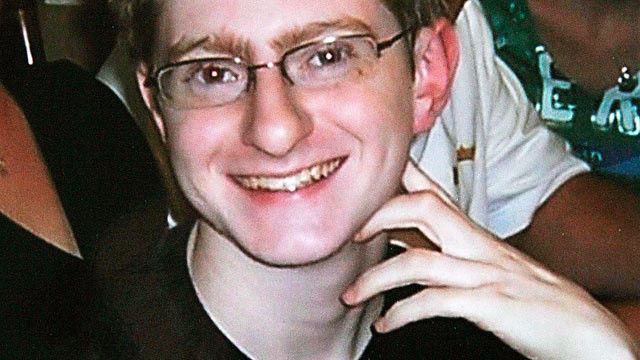
My clear example is the Ravi and Tyler Clementi case which occurred at Rutgers University approximately a  year ago. A young man's homosexual identity was exposed to many students around him in a seemingly unharmful act by Ravi but although Facebook was not a huge tool, a webcam and texting were aids and sources in the trial. Students should be constantly aware of what is going on in their environment and protect their identities on social networking websites and more. 

Book Review #2


Turkle, Sherry. Alone together: why we expect more from technology and less from each other. New York: Basic Books, 2011. Print. 


Summary:
Alone Together reveals many of the hidden truths about today's youthful generation, their technology habits, and the ongoing development of isolation within these individuals. Sherry talks about how today's generation has adapted to the technological advances and has become accustomed to living every moment of their lives with their cell phones, Internet, and social networking websites.


Author Information:

Turkle is a Professor of Social Studies and Sciences at Massachusetts Institute of Technology, she has a PhD in Sociology and Personality Psychology from Harvard University and a BA in Social Studies from Harvard University. She has plenty of experience and knowledge in her field through her studies and interaction and has written two books. 

Key Terms/Concepts:

Authenticity was a clear point made to my in Turkle’s book as even older generations turned to technology for comfort and an individual outlet.  Authenticity addressed the importance of how real life relationships could be mistaken for what technology replaces in our world. How “friends” on Facebook are merely a virtual presentation and link to another person and how therapeutic pets present themselves as real life things as they take the place for comfort and stress. It is crucial to understand that authenticity should be upheld as we approach the future and how it is the physical people and emotions that should sustain in the world.

Connectivity and its disconnects was also brought up by Turkle. It demonstrates how the online world has separated people from the relationships they use to maintain and has made them different. People have become isolated by the Internet and have become lured by its accessibility and convenience. Make a phone call? No I rather shoot a text. These capabilities of technology have made humans more as individuals although the purpose was to bring them together bound by a common interest and advancement.


Quotations:
“She is a modern Godilocks: for her, texting puts people not too close, not too far, but just at the right distance” (Turkle 276)

This is one of the most attractive aspects of the Internet to young generations and to older generations as well. Texting has become convenient and inevitable as people have become too busy to bother with phone calls or face to face contact. I think this is one of the beginning stages on how students become isolated and are not aware of their privacy exposed. It is so common for young adults to speak their mind freely via text message without any consideration of who can find the information.

“And now we look to the network to defend us against loneliness even as we use it to control the intensity of our connections” (Turkle 274)

This goes along with my argument about Goldilockses and how we look to technology as an outlet for our problems and for time management. Individuals become more secluded and independent as they rely heavily on their technology to solve their problems the fastest way possible.

“I believe that in our culture of stimulation, the notion of authenticity is for us what sex was for the Victorians- threat and obsession, taboo and fascination” (Turkle 266)

I agree with Turkle. She validates that we have become familiar with fake or different methods of our environment and interaction. Although in this example she is referring to a turtle is important to see the metaphorical reflection on people and their communication. The real way of speaking and getting in touch with people is no longer routine or the norm. Instead we rely on Facebook statuses to let everyone know what we are doing or send out wedding plans via email. It is a different era for communication.

Connection to Research Question:
Turkle has many important facts about technology and its effect on young adults. I think she makes interesting claims about the altering habits of our generation and how technology has taken over the instincts of humans. Although my paper does not pertain to robots I can see how they will be a part of our future as we hand over our natural skills and impulses. When referring back to my research question:

“How have modern technology and social networking websites endangered college students and what is the fate for its advancement towards minimal privacy?”

It is important to notice that Turkle can validate that privacy has become insignificant because of “connectivity and its disconnects”. College students prefer to be associated with others via their cell phones and Facebooks and be oblivious to the effects that come with the information posted and exposed.

I will need to look at Turkle in the grain to grasp how authenticity is important but has been reinvented. Her child was a part of a drastic generation than her own and society has to adjust their objections to the flow towards the future. Although I can propose many ways that younger people should not always be on their phones and Internet it is inevitable that they will continue and it should be embraced that technology can bring about an authenticity of its own. New discoveries for relationships and the “individual” should be welcomed.

Connection to Previous Readings:
When looking back at the readings from the beginning of the semester I see a clear connection with “The De Facto Privatization of American Public Higher Education”. Turkle finds younger generations guilty for their addiction to technology and inability to rationally see its negative impacts. The article on privatization finds politics guilty for “shrink[ing] the sphere of public responsibility and shifts risk to individuals, often those least able to cope with additional financial insecurity” (Lyall 9). It is important to notice how there is a trend in the habits of universities and their influence on students tuition costs and future education. Likewise, students become regularly use to being individuals and being treated with less communal respect. With the standard revealing that younger generations should be independent and think on their own, they are already familiar with these habits from the Internet challenging them to use their skills and be isolated from other relationships.

Monday, March 5, 2012

Blog #7: Scholarly Review


Social Networking and College Students: The Fate Facebook holds for Students' Face Value

http://140.234.1.9:8080/EPSessionID=a54ef2902edb1d456efd6eb9ae3cc3a8/EPHost=web.ebscohost.com/EPPath/ehost/imageQuickView?sid=0b43af3c-befc-432a-ab8a-80d3ce247f1a@sessionmgr13&vid=1&ui=18089139&id=57291991&parentui=57291991&tag=AN&db=aph

This is a link that shows the data of college student participants who recorded their time on their phones with their literacy skills. 


My research on the topic of social networking and its detrimental impact is a tribute to how privacy invaded the life of a former Rutgers student, Tyler Clementi, and how privacy is a crucial and valuable part to maintain a healthy college experience.

Wandel, Tamara L. "Colleges And Universities Want To Be Your Friend: Communicating Via Online Social Networking." Planning For Higher Education 37.1 (2008): 35-48. OmniFile Full Text Mega (H.W. Wilson). Web. 5 Mar. 2012.

Summary: The scholarly article explained in detail how social networking cites have consumed the lives of college students, using examples and statistics that show 85% of students in American four year universities own a Facebook. The article explained the ways in which these networking cites have been used, with college admission and investigation of students, students searching their potential roommates, and how it reunites people in circumstances like the Virginia Tech massacre. In other instances, Facebook and social networks can ruins one life. The article stated an example of Jessica Binkerd who was sentenced to five years in jail after "photographs  of the  University  of California,  student  drinking  alcoholic  beverages  with  friends  were posted  after the  date  of the  fatal  accident" (Wandel 40). In many ways social networking cites guide and control the lives of college students, deciding if their college acceptance will remain, if the college athlete will keep his scholarship, if the whole campus will see how drunk you were and your stupid decisions; social networks formulate your reputation and future. The article goes into vast detail in each of these circumstances and concludes how students should be aware of its danger, what they post and how it will never be truly deleted.

Terms/Concepts: 
Privacy and the ability of college students to seclude themselves and their personal information from the public world.
Facebook and social networks serve as a purpose for students to meet new people, maintain relationships and constantly interact. 


Quotes:
" the  University  of  Michigan  in Ann Arbor  is  one of  many  postsecondary  institutions  that have taken  a  proactive  stance. The  university's  Department  of Athletics  created  a  Student-Athlete  Conduct Policy  as  an  educational  tool  focused  on three areas: internet social  networking  community  sites, athletic department  policy,  and recommendations.  As  of  2007-08, student-athletes  are  required  to sign a  pledge  regarding good  conduct  on  social  networking  sites  as  part  of  their code  of  conduct. (Wandel 41)
The actions of the University of Michigan reveal the direct efforts of a college to watch and maintain the student athletes. Although privacy is being positively controlled in this scenario, it depicts how one new revolution, social networking, has begun to shape the college student and their expectations at their university. 

Eight percent of  students  acknowledged  that they  purposefully misrepresented  themselves on  Facebook  by  exaggerating alcohol  or drug  use. Twenty-three  percent  said the misrepresentation  was  done to  be funny. Not  surprisingly, this  is  not how students would  like  to  be viewed  by potential  employers.  In fact,  42  percent  of  students surveyed  in the Wiley  and  Sisson  study felt it  was a violation  of  privacy to  consider  Facebook  profiles  as  part of  the  hiring  process. (Wandel 43)  "

These startling statistics are the honest truth but it is inevitable that the open world wide web will be used by colleges and employers to find the little details about their personal lives. Stalking has become as simple as a click of a mouse pad and revealed is information about last weekend's shit show and your rude status about your professor's boring lecture. 

" Like  it or  not, communicating  via  online social  networking sites is  what millions  of young  people do  each  day. A market research  study commissioned  by  MySpace,  Isobar, and  Carat USA  (Fox  Interactive  Media  2007) found  a  tie  in the  top two choices  of what  15  to 34-year-olds  would  do  if they  had  15  minutes of time:  they would  either  check  out a  social  networking  site or  talk  on  their cell  phone. (Wandel 47)"

    It has come to that point where I have to consider if the world might be ending. Social media has abducted previous leisure activities and has addicted the overall population to succumb to its horrible habits. It is the generation I live in and I must admit I follow these practices but I would like to find a solution and propose how the future could be influenced more beneficially.

Lastly, this article has really expanded my knowledge about the impact of technology and especially social networks. After reading the newspaper about Clementi's trial I was inspired to take an initiative on his experiences and what he endured. It was his personal privacy that was invaded and he took away his own life rather than finding a solution. The reality is that social networks and the invasion of privacy have this impact. I am not saying that it will be to this extent for a majority of young adults or even many people but it does hold a great deal of uncertainty for their future with regards to careers, graduate school, college if they are still in high school, legal matters, and just an overall reputation. Social networking has led me down a new path away from dorming and I think I prefer this topic. I would like to expand on the power social networks hold for their users and the effects it can have.